


With the U.S. Trade Representative’s (USTR) port fees taking effect this week, only one Chinese-built vessel is scheduled to call at the Port of Los Angeles during the seven-day period.
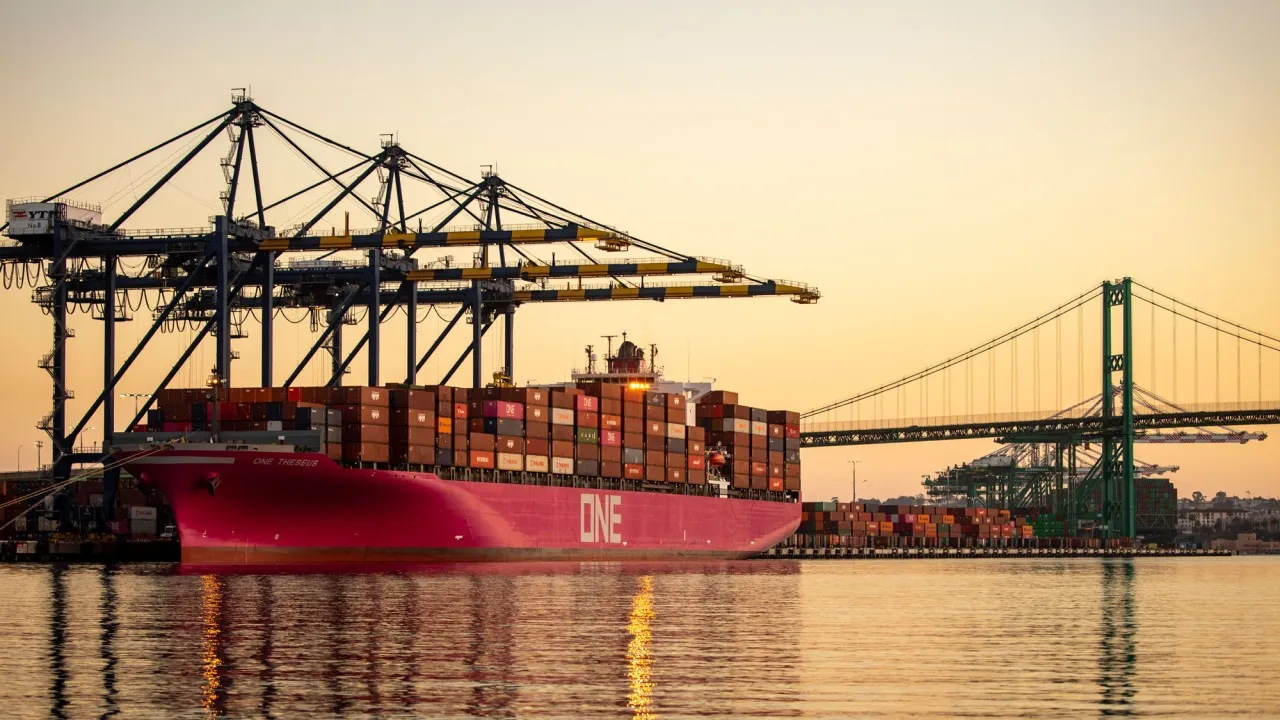
In his monthly briefing, Port of Los Angeles Executive Director Gene Seroka explained the impact of USTR Section 301, which took effect on October 14, on taxes on Chinese-flagged, Chinese-built, or Chinese-operated vessels.
“On the ship side it’s a very complicated series of formulas that’s meant to assess the highest fee possible. For context here in Los Angeles just a little more of the 20% of the ships that called here were built in China or run by companies based there. To current events, this week we only have one ship that was built in China calling at the Port of Los Angeles,” Seroka explained.
According to data from the Port of Los Angeles’ Port Optimizer Control Tower, 22 vessels are scheduled to call at the port during the week of October 12 to 18. Among them, only one Chinese-built vessel is expected to arrive, accounting for 4.5% of the total port calls—significantly below the 20% average for 2024.
Under the USTR port fee policy, for vessels owned and operated by China, the fee will be $50 per net ton starting October 14, 2025, rising to $140 per net ton by 2028. For vessels built in China, the fee will be $18 per net ton or $120 per container starting October 14, 2025, increasing to $33 per net ton or $250 per container by 2028. The annual fee per vessel is capped at five times.
The Port of Los Angeles had set a record for cargo throughput before September, but it is now facing multiple shocks from the U.S.-China trade war and the ongoing 15-day U.S. government shutdown. However, the port remains fully operational as of now.
When discussing recent developments within the U.S. federal government, Ceroka stated: “It’s been a whirlwind to say the least and I’m not sure there are calm winds just yet.”
Cerroca added, “The agricultural sector is bearing the brunt of the trade conflict. While relief measures are currently under discussion, this is not a long-term solution.”
The Port of Los Angeles handled 883,058 TEUs in September, a 7.5% year-over-year decrease. However, overall throughput for the third quarter reached a record high of 2.9 million TEUs.
“As we have stated for the past several months, the import-to-U.S. exports ratio continues to remain at 4:1. This data reflects the real impact that the ongoing trade negotiations are having on our agricultural sector.”
According to Port Optimizer Control Tower data projections, import volumes are expected to decline significantly in the coming weeks. October 26 to November 1 (Week 44): Only 15 vessels are scheduled to arrive, carrying 76,129 TEUs of import cargo. This compares to 22 vessels arriving weekly over the preceding two weeks, handling approximately 115,000 TEUs of import freight.