


On November 16, Dalian Shipbuilding Industry Corporation (DSIC) delivered two new vessels: a 307,000-dwt crude oil tanker and a 16,000 TEU LNG dual-fuel container ship.
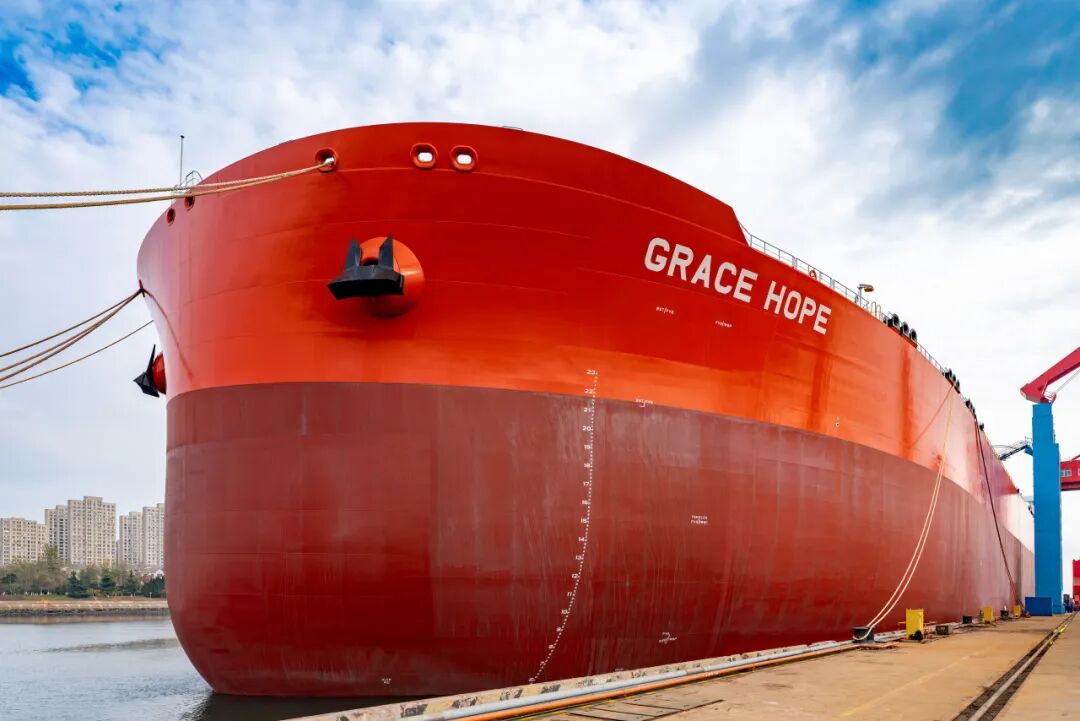
The 307,000-dwt crude oil tanker “Grace Hope,” built by DSIC in collaboration with China Shipbuilding Trading Co., Ltd. (CSTC) for CIDO Shipping, was named and delivered 77 days ahead of the contractual schedule.
The vessel “Grace Hope” features a deck area exceeding 18,000 square meters, with a total coated surface area of over 540,000 square meters. Through the optimization of hull form, the integration of energy-saving devices, and the innovative adoption of a 6-cylinder main engine, the vessel achieves significant improvements in overall energy efficiency and environmental performance, reaching a world-class standard.
The vessel demonstrates excellent adaptability to various ports and shipping lanes; at a design design of 20.5 meters, it can carry over 2 million barrels of crude oil while navigating the Strait of Malacca. Embodying a design philosophy centered on “green, eco-friendly, and energy-efficient” principles, the ship is equipped with an exhaust gas desulfurization system (scrubber), which yields annual fuel cost savings of approximately 35 million RMB.
The 16,000 TEU LNG dual-fuel container ship MSC Marianna XVI—built for Minsheng Financial Leasing by CSSC (Tianjin) Shipbuilding (a subsidiary of DSIC) in collaboration with CSTC—was named and delivered 135 days ahead of the contractual deadline.
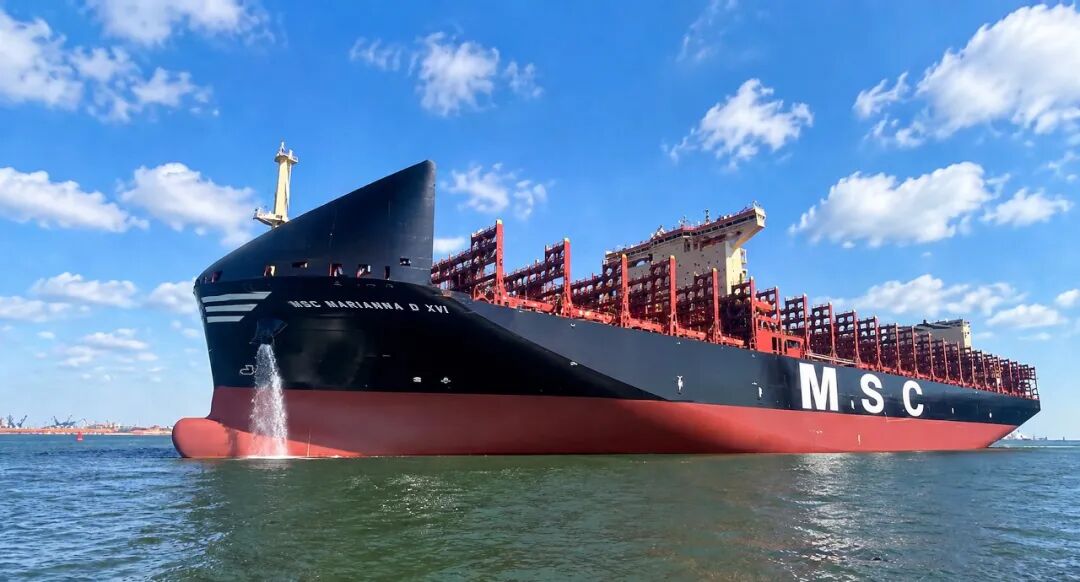
Featuring a cutting-edge design that integrates multiple energy-saving and drag-reduction features with a low-carbon propulsion system, this vessel effectively reduces energy consumption during operation and significantly cuts emissions of sulfur oxides, nitrogen oxides, and carbon dioxide, meeting IMO Tier III emission standards. It is a safe, reliable, and highly energy-efficient large container ship. The vessel’s key construction cycle was shortened by 76 days compared to the standard cycle, and the mooring, installation, and Commissioning took only 75 days, setting a new record for the underwater construction cycle.