


U.S. President Trump has signed a national security memorandum titled “Rebuilding the U.S. Navy and the U.S. Shipbuilding Industrial Base”, directly addressing long-standing issues of cost overruns, schedule delays, and capacity constraints in U.S. defense shipbuilding programs.
The White House believes that the excessive complexity of U.S. Navy ship design projects, repeated design changes during construction, and a lack of competition have led to severe backlogs in six major shipbuilding projects, while the competitiveness of U.S. commercial shipyards in the global shipbuilding industry continues to decline.
In response, Trump has called for a comprehensive overhaul of the U.S. Navy’s shipbuilding system. Key measures include allowing foreign shipyards to undertake defense shipbuilding projects, establishing a fifth public U.S. naval shipyard, and replacing critical technologies planned for the next generation of U.S. aircraft carriers.
Adopting the “Finland Model” to Allow Defense Shipbuilding Projects to Go Overseas
According to the aforementioned national security memorandum, the most significant breakthrough in Trump’s reform of the U.S. Navy’s shipbuilding system is the creation of a pathway for foreign shipyards to participate directly in U.S. Navy defense shipbuilding projects—an approach the U.S. government has dubbed the “Finland Model.” Under this model, after a foreign shipyard undertakes a U.S. defense shipbuilding project, it may initially build up to two vessels overseas, while the construction of all subsequent vessels of the same class is transferred to shipyards within the United States.
This model draws upon the cooperation framework established between the U.S. and Finland in October 2025 regarding the U.S. Coast Guard’s 11 Polar Security Cutters. For the six vessels being built through a partnership between U.S.-based Bollinger Shipyards and Finland’s Rauma Marine Constructions, the first two are to be constructed at the Finnish shipyard, with the remaining four transferred to Bollinger Shipyards for completion. Davie Defense is adopting a similar approach: the first two vessels will be built at the Helsinki Shipyard in Finland, while the other three will be completed at its new shipyard in Texas.
Recent reports indicate that the U.S. has expanded this cooperative model to three categories of vessel procurement projects: surface combatants capable of anti-submarine warfare, surface warfare, and escort missions; logistics support ships for replenishment; and military sealift roll-on/roll-off (Ro-Ro) transport ships. Specific vessel designs have not yet been finalized and will be selected through a new competitive procurement process.
The U.S. side indicated that to qualify for cooperation, foreign shipyards must build new facilities or acquire majority stakes in existing ones within the U.S., recruit and train local shipyard workers, transfer proprietary core shipbuilding technologies, and establish U.S.-based supply chains. These requirements aim to rapidly bridge capability gaps by leveraging mature foreign ship designs and overseas production capacity, with the long-term goal of bolstering U.S. shipbuilding capabilities.
At the same time, the national security memorandum approved by Trump empowers the U.S. government to grant exemptions to the general ban on constructing military vessels in foreign shipyards for eligible projects. Each national security exemption decision must be reported to Congress, and contracts may only be formally awarded 30 days after lawmakers receive such notification.
In addition to partially easing restrictions on shipbuilders, the directive signed by Trump seeks to address a long-standing issue: the frequent alteration of ship designs after construction has already begun on U.S. Navy shipbuilding projects. It mandates that the Navy may not arbitrarily modify mature foreign “parent” designs adopted under new procurement plans; any changes require approval from senior officials at the Pentagon, the Navy, the White House, and the Office of Management and Budget.
Simultaneously, Trump ordered a review and reorganization of the Naval Sea Systems Command (NAVSEA) aimed at more closely linking leadership accountability to the speed of ship and system delivery, streamlining approval processes, and eliminating unnecessary hull redesigns at the source.
stablishing a Public Naval Shipyard
Another key provision of the initiative to rebuild the U.S. Navy and its shipbuilding industrial base calls for the establishment of a fifth public U.S. Navy shipyard—a move the White House describes as the first construction of a new public naval shipyard in over 80 years.
The U.S. government has mandated the development of a plan within 120 days to expand maintenance capabilities for submarines and aircraft carriers by leveraging both private-sector capacity and the new public shipyard. This plan may involve constructing up to three large dry docks capable of accommodating current and next-generation nuclear submarines, with funding potentially secured through a public-private partnership model. It also calls for the creation of centralized component repair centers capable of storing and refurbishing submarine equipment.
Major Technical Adjustments for Ford-Class Aircraft Carriers
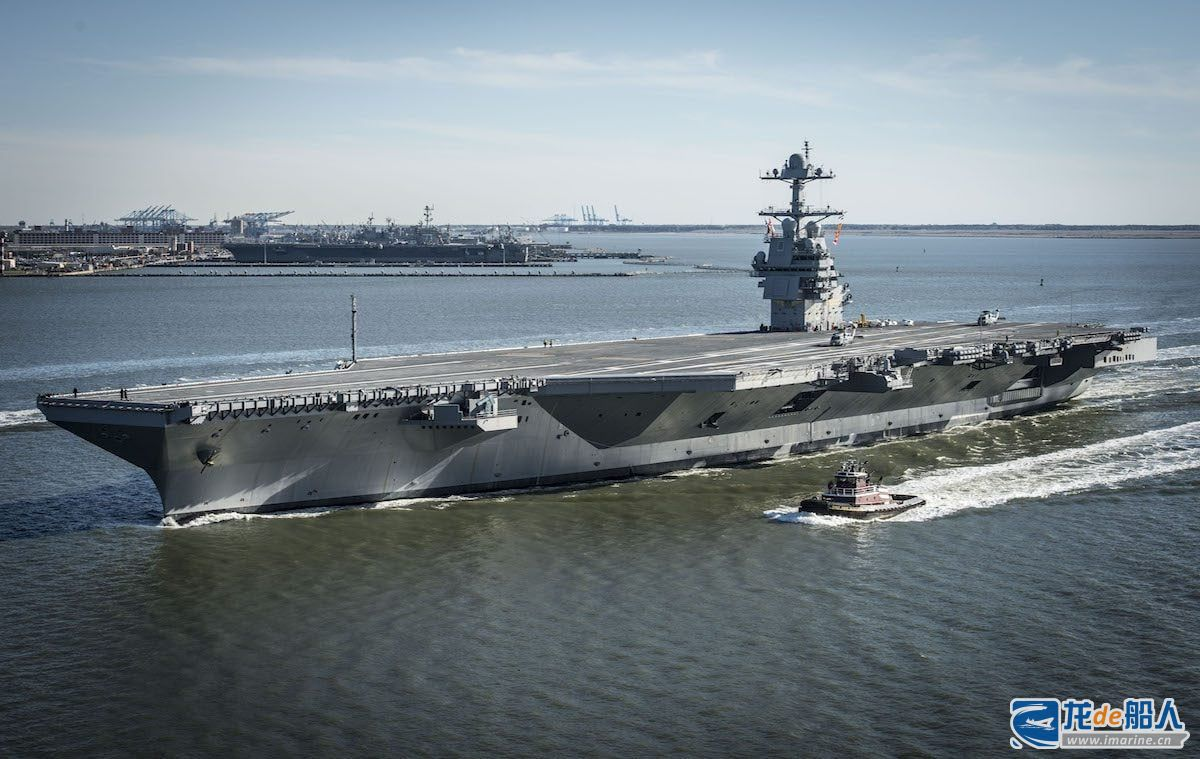
Additionally, in a recently signed national security memorandum, President Trump reiterated his long-standing criticism of the electromagnetic launch systems used on *Ford*-class aircraft carriers. He directed the Pentagon and the U.S. Navy to formulate a modification plan within 60 days: this plan entails removing the electromagnetic launch systems and electromagnetic weapons elevators from the *Ford*-class carrier currently under construction, the *Doris Miller* (CVN-81), and reverting to legacy steam catapults, while simultaneously outlining the timeline and funding requirements for the conversion.
This move signals a major departure from the signature new launch and recovery technologies that define the Ford class, and it may necessitate an extensive redesign and structural modification of the carrier currently under construction.