


On September 30, CSSC Guangzhou Shipyard International successfully launched two vessels: the seventh 111,000-dwt LNG dual-fuel crude/product oil tanker built for Singapore’s Eastern Pacific Shipping (EPS), and the second 10,800 CEU LNG dual-fuel car carrier built for the Korea Ocean Business Corporation (KOBC).
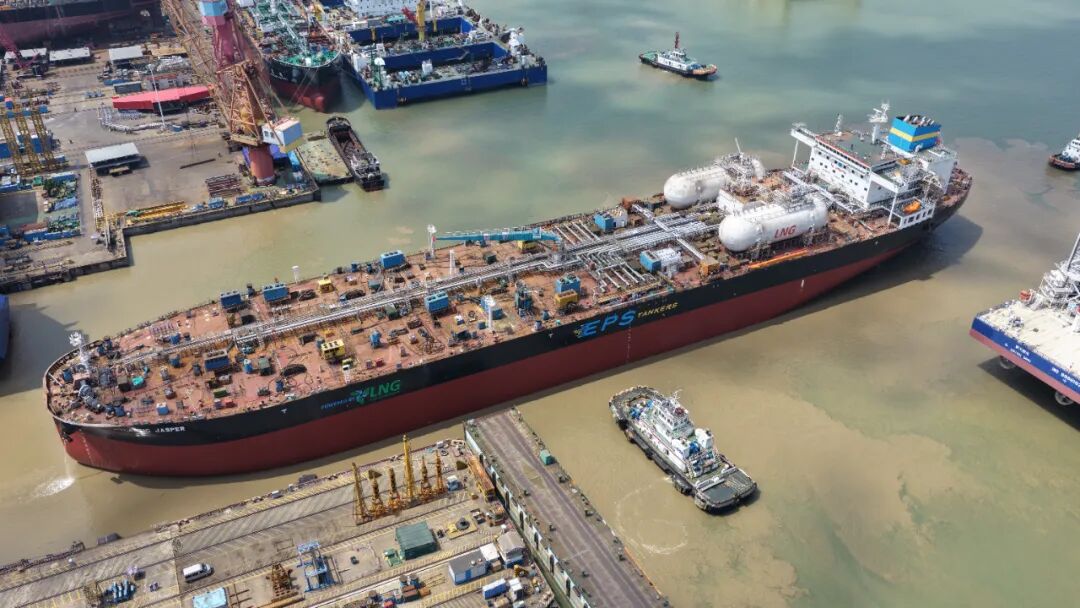
111,000 DWT LNG dual-fuel crude/product oil tanker (Hull No. 7)
A total of eight 111,000-dwt LNG dual-fuel crude/product oil tankers were planned for the EPS series; six have already been successfully delivered, and the vessel that has just launched is the seventh in the series.
The vessel utilizes a next-generation LNG dual-fuel LR2 tanker design independently developed by GSI. Measuring 250 meters in length and 44 meters in breadth, with a deadweight of approximately 111,000 tonnes, the vessel is powered by an LNG dual-fuel system. Its emissions comply with IMO Tier III standards, and its Energy Efficiency Design Index (EEDI) meets Phase III requirements. Key advantages include excellent speed, low lightship weight, low energy consumption, and broad operational adaptability.
10,800 CEU LNG Dual-Fuel Car Carrier (Vessel No. 2)
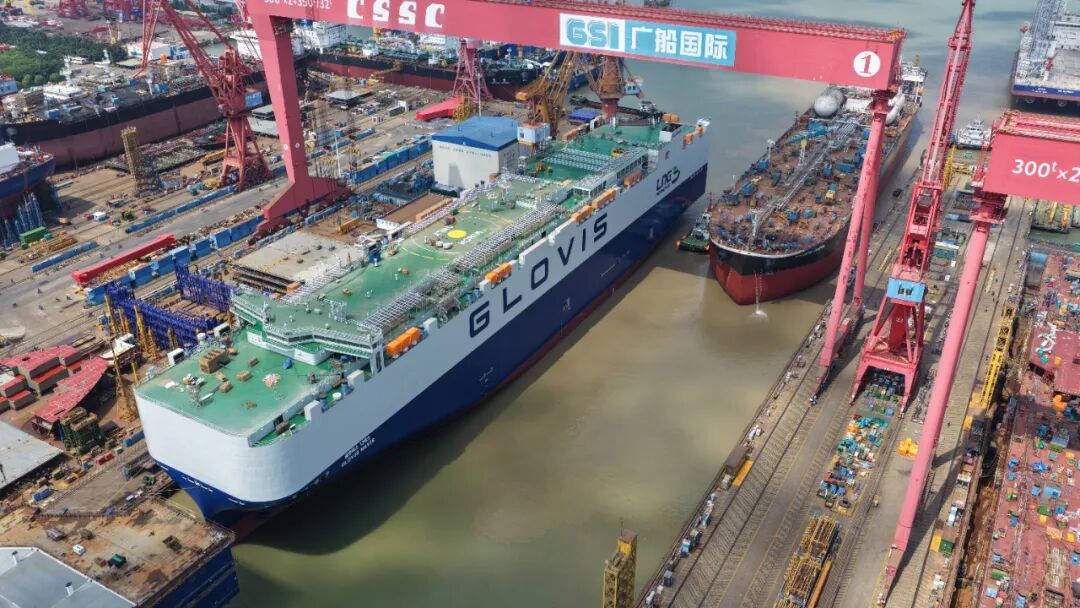
The second KOBC 10,800 CEU LNG dual-fuel car carrier is equipped with a dual-fuel (fuel oil/LNG) propulsion system and a shaft generator, with emissions meeting IMO Tier III standards. The vessel incorporates energy-saving devices such as a twisted rudder, a hub-fin, and a pre-swirl duct, alongside photovoltaic panels and a shore power system, establishing a green, low-carbon operational model that integrates shaft generation, LNG, solar power, and shore power across the entire voyage.
This vessel set a record for the shortest dry-dock construction period among GSI’s 10,000 CEU-class PCTCs, establishing a benchmark for the future construction of similar vessels. By deeply implementing lean shipbuilding practices and optimizing construction workflows, GSI reduced the dry-dock period by 9% compared to the average for this vessel type and achieved early completion of multiple key milestones during the dry-dock phase.