


Russia plans to impose a new levy on seaborne exports to raise over 200 billion rubles (approximately $2.35 billion) for the construction of nuclear-powered icebreakers, aiming to support increased shipping volumes along the Northern Sea Route (NSR).
A draft government decree recently prepared by the Russian Ministry of Transport proposes a special shipbuilding levy of 20.07 rubles per tonne. This fee would apply for a period of 10 years to 27 domestic companies that transport export cargo through Russian ports using Russian-flagged vessels.
In effect, this draft shifts a portion of the costs associated with Russia’s Arctic strategy directly onto exporters, highlighting that the availability of icebreakers—rather than merely the melting of sea ice—remains a primary constraint in transforming the Northern Sea Route into a major, year-round shipping lane.
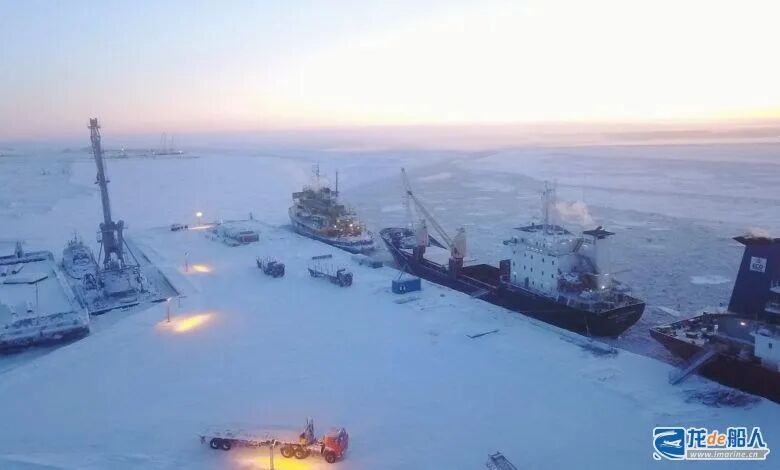
Under the plan, the revenue generated by this levy will primarily fund the construction of the “Leningrad” and “Stalingrad”—two Project 22220 nuclear-powered icebreakers—as well as two 7-megawatt emergency rescue vessels.
According to Russian media reports, the estimated construction cost for the “Leningrad” and “Stalingrad” (along with their supporting vessels) has surged from 143 billion rubles in 2022 to 225.6 billion rubles for 2026—an increase of 82.6 billion rubles.
The development of Russia’s Project 22220 nuclear-powered icebreakers began in the 1990s with a five-year construction cycle, aimed at modernizing the country’s aging icebreaker fleet. Through continuous design optimization, this class has become the world’s largest and most advanced nuclear-powered icebreaker; featuring a 40-year service life and a length of 173 meters, it is powered by two commercial nuclear reactors—each with a thermal output of 175 megawatts—capable of achieving a top speed of 22 knots and breaking through ice up to 3 meters thick.
As of early 2026, several Project 22220 vessels have been delivered and entered service: the “Arktika” (2020), “Sibir” (2021), “Ural” (2022), and “Yakutiya” (2025). Three additional vessels are currently under construction: the “Chukotka” (nearing completion) and the “Leningrad” and “Stalingrad”.
As the nation possessing the world’s largest fleet of icebreakers, the most advanced technology, and the strongest polar operational capabilities, Russia—in addition to the Project 22220 nuclear-powered icebreakers—has been constructing its new-generation heavy nuclear-powered icebreaker (Project 10510) at the Zvezda since 2020, with the lead vessel, “Rossiya”, scheduled to enter service in 2030.