


As one of South Korea’s three major shipbuilding giants, Samsung Heavy Industries is fully committed to its “global operations” strategy. Its Geoje Shipyard, located in South Korea, focuses on building high-value-added vessels, while outsourcing routine orders such as crude oil tankers to shipyards in Southeast Asia, aiming to enhance its overall order competitiveness. Vietnam is a key market in Samsung Heavy Industries’ “global operations” strategy.
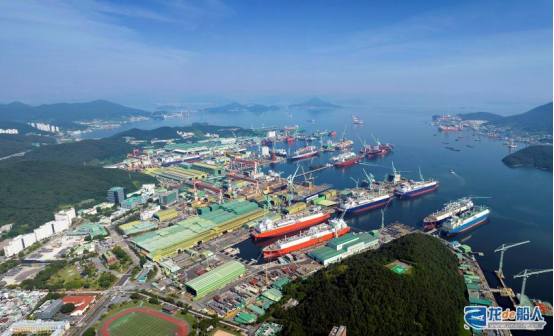
According to South Korean media reports, Samsung Heavy Industries has recently completed the process of establishing a local subsidiary in Vietnam. In March 2026, the Management Committee under the board of directors of Samsung Heavy Industries approved the proposal to establish a new legal entity in Vietnam and subsequently initiated the follow-up procedures. Samsung Heavy Industries explained that “the decision to establish a new legal entity in Vietnam is a necessary measure to ensure the smooth implementation of the ‘global operations’ strategy, in accordance with local regulations.”
Samsung Heavy Industries stated that its current order backlog is mainly for high-value-added vessels, and strengthening cooperation with Vietnamese shipyards is expected to expand overall production capacity. This move will also help enhance order competitiveness by effectively controlling operating costs such as labor and improving delivery efficiency, which is one of the main goals of Samsung Heavy Industries’ “global operations” strategy.
Currently, Samsung Heavy Industries is accelerating its “global operations” strategy, primarily outsourcing crude oil tanker construction to shipyards in China, South Korea, and Southeast Asia, while Samsung Heavy Industries is responsible for the design, guarantees, equipment, and material procurement of new ships. Meanwhile, Samsung Heavy Industries’ Geoje Shipyard in South Korea focuses on building high-value-added vessels such as liquefied natural gas (LNG) carriers, environmentally friendly container ships, and FLNG, and is striving to develop Geoje Shipyard into a technology research and development center.
Between 2024 and 2025, Samsung Heavy Industries outsourced eight Suezmax tankers to PaxOcean Engineering Zhoushan Co., Ltd. (POEZ). As its “Global Operations” strategy continues to advance, Samsung Heavy Industries is gradually reducing its reliance on Chinese shipyards and shifting orders to shipyards in Vietnam.
By the end of December 2025, Samsung Heavy Industries had outsourced three Suezmax tankers to PetroVietnam Shipbuilding and Mechanical (PVSM), a subsidiary of Vietnam’s National Industry and Energy Group. During the cooperation period, Samsung Heavy Industries will be deeply involved in the entire process from design and construction to product acceptance, and will directly supervise the technical aspects.
Regarding the reasons for shifting to Vietnamese shipyards, in addition to labor costs, the increased risks associated with ships built in China due to US policies are also a key reason why Samsung Heavy Industries no longer considers Chinese shipyards as its first choice for outsourcing.
In addition, South Korean shipyards are also included in Samsung Heavy Industries’ outsourcing scope. For example, Samsung Heavy Industries has outsourced the construction of four medium-sized oil tankers to HSG Seongdong Shipbuilding, which—following its bankruptcy restructuring—primarily undertakes the construction of hull sections. Samsung Heavy Industries’ shipbuilding outsourcing contracts will help HSG Seongdong Shipbuilding secure a stable source of orders, thereby accelerating its return to full-ship construction.